Freitag, 26. Februar 2016

The cacti species is endangered!!!

The article, Nearly 1/3 of world's cacti species facing extinction, published by the University of Exeter in 2015, mentions a very big theme, which is occuring right now in science and which has to be stopped: EXTINCTION.

The article is talking of how endangered the cacti are through human influence. Cacti belong to the autotrophs, which produce their own food, therefore they are very independent and humans don't use them as consumers because it doesn't belong to their normal food supplies, wherefore that can't be the reason for their progressing extinction. 
The cacti do as well as the humans belong to the biotic factors in our ecosystem because they are living and because they live they have to be protected so that there is a larger variety of species. 

Cacti are also very important because they they produce energy in form of organical compounds and oxygen by using the sun and converting CO2, which is an abiotic factor. The cactus normally also uses the convertion of inorganical compounds like inorganic phosphorous to produce for example ATP in photosynthesis.These plants are a very important base for our community of biotic factors, like animals which are heterotrophs, because loads of animals get their food supply through cacti.

Cacti are sustainable communities which means that they can live without that resources are shortened after a while, so the aren't a problem for the environment. Instead it is the human who is a thread to the cactus, because we take their space through agriculture, remove them from their normal habitats to trade with their seeds, which is illegal and therefore shouldn't be done anyways. 

http://www.enn.com/wildlife/article/49062

Gene transfer as a treatment for hemophilia

I think that the article, Evidence for gene transfer and expression of factor IX in haemophilia B patients treated with an AAV vector, published by the paper nature genetics is very interesting, because it speaks about the sex linked disease, hemophilia and even though in the past thought to be uncurable, there has through science now been found a solution to cure this disease.


Sex linked means that the gene is linked to the x chromosome, so that for males, the possibility of expression of the recessive gene is much larger because they just have one x chromosome and no other one to compensate that one if it is diseased. 

The article suggests that there is a adeno-associated  viral vector (AVV) that can be added to person with hemophilia. This protein would then encode the blood coagulation (clotting) factor IX to correct the hemophilic phenotype. Therefore the person would be cured. Furthermore, there is also proved to be no following immune reaction to it so that there wouldn't be a negative reaction with antibodies.


The following source gives an example of the trial on animals:
http://www.nature.com/ng/journal/v24/n3/abs/ng0300_257.html

In this source we see, how the AVV was successfully inserted into humans:http://www.nejm.org/doi/full/10.1056/NEJMoa1108046

Montag, 15. Februar 2016

The human Genome Project

The human Genome project was started in 1990 and was finished in 2003. It's aim was to sequence the 'euchromatic' regions of the genome, which make up 90% of the genome. The other region, called 'heterochromatic', which is found in centromeres and telomeres, is not sequenced by the project. In the process of the project 20 countries contributed to the project, including the US, UK, China, France, Japan and Germany.
The aim of the project was to identify the base pairs which make up the genome. The outcome of the sequencing was, that there are around 20500 genes in human beings and the scientists found that surprisingly many segmental duplications were occuring in the DNA, which we can also call repeats of DNA sequence.

This website is very interesting because i  tgives a summary of the Genome project and lists all the different methods they used to sequence the DNA:

http://search.proquest.com/openview/1dc75f11d4e2ceeda7c0125f3c469dd3/1?pq-origsite=gscholar

Shotgun sequencing is one of the methods which was under the most important ones to discover the base pairs. This type of sequencing is particularly efficient because it cuts the DNA into segments, which are then replicated in bacteria and afterwards the different parts of DNA are analysed and the base pairs aredetermined. Then scientific technologies can be prorammed to sort the base pairs and look for overlaps. In the diagram below is described the procedure precisely again:

Sonntag, 14. Februar 2016

Basic facts of Down's syndrome


The cause of Down's syndrome:

Well, the story starts like that: There happens an error in cell division which is called nondisjunction. Here the chromosome 21 of the human genome doesn't divide properly and this results in an additional chromosome 21 in the genome of an embryo.
There are three types of trisomy 21, where either a whole extra chromosome is placed into a sperm or eggcell, which results in 3 chromosomes of the same kind. We call this complete trisomy 21.
Another case is mosaic trisomy 21, where there was a correct number of chromosomes when sperm and egg united but shortly afterwards disjunction happened so that part of the cells carry an extra chromosome 21. The third case would be translocation trisomy 21, where just a section of the chromosome is added to a full set of chromosomes and is by cell division copied into the other cells.

The symptomes:
There are two kinds of impairment to notice for Down's syndrome:

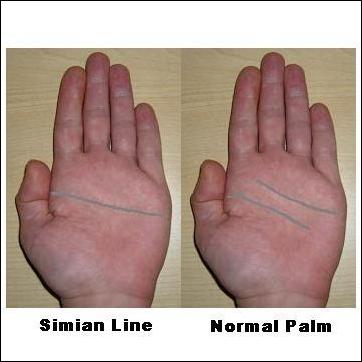
Physically, there are multiple things, which can cause difficulties for people with Down's syndrome. These include a poor muscle tone, short necks, excess skin on the neck, a flattened facial profile, small ears, eyes and mouth, upward slanting eyes, white spots in coloured parts of the eye. Additionally they have wide hands, which are short and short fingered, and which also include a deep crease across the palm. About there toes there is to notice a deep groove between first and second toe.

Also mentally there are some impairments in spite of the impairment of movement, which also exists. They have most times a slowliness in thinking and learning and general cognitive processes. Also, they have poor concentration and judgement and can have strong impulses. Nevertheless they can in their mental ability reach a potential good level and don't necessarily have to be much disadvantaged to healthy people.

Other impacts of Down's syndrome:

People with this disease today have a life expectancy of around 60 years, which is a great improvement to 1983, where it was much lower with 25 years.

One complication of Down's syndorme is also that they are more infertile with around 30-50 % of women who can reproduce and nearly no men, whereby it is unsure if men lack in sperm development or are just uninterested in sexual activity. But half of the children who have are produced by people with Down'ssydrome inherite the disease, when not using assisting technologies.

Ethical issues:

Mother with Downs Syndrome, Father with slight mental handicap,
completely normal baby, one incredibly happy family.
The most important fact of people who have the syndrome is that we don't disadvantage these people and that we respect them and treat them with care and charitableness. One ethical issue which I see in the whole issue is weither it should be allowed for them to reproduce, because they will have a high chance to give birth to another human with the syndrome. Here the question is if it is good for the child itself to have such social disadvantages when it lives in our societies and that there has probably to be money provided from the state, which is eventually the money of our health insurance bill payed. In addition there is the question if the Down's syndrome suffering parents are responsible enough to bring the child up properly. But all in all I think that because the Down's syndrome sufferers ae humans and have therefore the right to act on their own and have freedom of action, they should probably be allowed to decide to have chidren, also I disapprove of the decision itself.


https://en.wikipedia.org/wiki/Down_syndrome#Fertility
http://www.ndss.org/Down-Syndrome/Down-Syndrome-Facts/
https://www.nichd.nih.gov/health/topics/down/conditioninfo/Pages/causes.aspx

Sonntag, 31. Januar 2016

How humans can boost photosynthesis

In the article 'Supercrops: fixing the laws of photosynthesis', published by BDebora MacKenzie in 2010, there is a debate about which factors can be improved for more efficient photosynthesis.

Factors, which explain the inefficiency, are:

One way chould be, to reduce the chlorophyll level in plants, which is four times as much as is needed. This would help to transfer more light through the leaves to lower plants and leaves. The excess chlorophyll also leads to a too fast absorption of light, which can damage the leaves. Therefore a way to improve the plants would be to reduce chlorophyll.

Another aspect would be to improve the storing of the energy and shift it to edible parts of the plant. This has already happened and half the energy output is nowadays in the seeds of plants.

What has also been improved already in the past is the hight of plants, the position of the leaves, to perfectionise the sunlight capture.

A very big issue and waste factor of energy is the enzyme 'rubisco'. It is very slow and therefore there is needed a lot of it in a plant. Also it's grabbing of the CO2 Molecules is very inefficient and it accidentally sometimes takes oxygen instead, which leads to loss of one CO2. But to engineer rubisco to be more efficients seems impossible.

Other plants in the early atmosphere found a good solution to capture CO2 efficiently by using another enzyme to grab the CO2 and transfer it to another compartment of the cell where it is added to a 3C molecule to result in an 4C molecule, which was then given to the rubisco enzyme.This C4-photosynthesis is more efficient then C3 photosynthesis because it results in less photorespiration by oxygen adding and hence, has more yild.The C4 plants are more resistent to the climate change and generally need less nitrogen.
To tweak therefore C3 plants into C4 palnts is the aim, but it is hard to achieve because it is not just adding enzymes but also the compartments of C4 cells are needed.
While this is complicated, a better way could be to take the rubisco of C4 and add it into C3 photosynthase, because the C4 rubisco can work faster due to it's weaker bonding.

These where the major ideas of the article, which fit to the theme of photosynthesis we just work on in class. I think that the article shows how far science is in this area and that it is good to put further research into that field because there are already good thoughts of solutions in the research and it could have a major impact on us with the climate change and food supply.

Sonntag, 24. Januar 2016

Separation of Chlorophyll Pigments by Paper

In my biology lesson we did a chromatography of chloroplast extract:

At first we added a spatula of anhydrous sodium sulphate into an Eppendorf tube.
Then we placed small pieces of spinach leaves into the tube and 5 drops of solvent A (2 parts ethyl ethanoate and 3 parts propanone) and stired al of it a metal probe:

Now we placed a dot of the solvent on a TLC plate with 5 mm space from the bottom edge:

After this we used a dropper pipette to place solvent B(5:3:2 mixture of cyclohexane, ethyl ethanoane and propanone) into a new vial (5mm hight of solution).
Finally we put the TLC plate into the vial and waited for a few minutes, so that the result was as shown here:


Dienstag, 1. Dezember 2015

We produce cat milk!

And this was our method:

At first we mixed lactase enzymes with sodium alignate solution.

Then we added one drop at a time to alginate solution.The beads, which you can see in the video, contain the lactase inside.

Afterwards we used a tea stainer to collect the beads... then we packed the beads into a column...

And when we pured milk (lactose sugar) into the column, the trapped enzyme in the beads split the disaccharide into galactose and glucose.


Voila cats, bon appetit!